

This is Part 2 of my 4-part series: Navigating The Stages of Growth. [View the Full Series Roadmap]
You recognize that your team or professional relationship is storming. What do you do now? How do you successfully navigate those choppy waters and steer the ship toward norming? Below, I’m sharing the exact tools and techniques I used throughout my career to help move my teams up the performance curve.
1. Recognizing That You Are Storming
For me, this is probably the most challenging part of leadership. It closely parallels something I struggle with on my personal mental health journey when dealing with anxiety: in order to apply the tools and techniques that help me move out of a negative spiral, I first have to build the self-awareness to recognize that’s what is actually going on.
For example, several years back, I was working with another Engineering Manager (EM). We had established a solid rhythm, but then a typical top-down reorg severely changed and diminished the scope of our partnership. In one of our subsequent 1:1s, I found myself getting incredibly frustrated with them. My immediate instinct was defensive; I thought they were out to sabotage my new responsibilities after the reorg.
But then I took a step back and remembered a fundamental truth of Tuckman’s model: a relationship can slide back to storming instantly whenever there is a shift in scope. Once I recognized that the friction wasn’t personal—it was just the natural progression of the model sliding backward—I was unleashed to use the proper leadership tools to get us back to norming.
In other words, we are usually frustrated as leaders before we actually realize our team is storming. Awareness is always step zero.
2. Assuming Good Intent
This tool is tightly related to the self-awareness piece. I usually find that when I am storming with a peer or a report, I have already judged their actions in a not-so-positive light. My innate, unfiltered thoughts tend to sound like:
- “They don’t know what they’re talking about.”
- “I can’t believe I have to work with so-and-so again.”
- “They want my job.”
- “They’re trying to recruit my reports to their team.”
When these defensive thoughts start creeping in, I use them as a loud signal to, as Cher famously said in Moonstruck, “Snap out of it!”
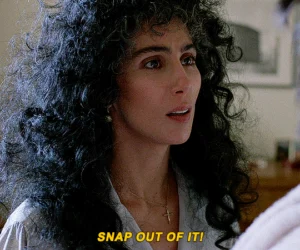
When I was working as a tech lead at Sephora, the VP of Product shared a piece of advice in our initial “get-to-know-each-other” 1:1 that stayed with me: “Always assume good intent.” At a 50,000-foot view, we are all on the same team, moving in the exact same direction. When the company is successful, we are all successful.
Even when you are dealing with a difficult teammate, assuming good intent lowers your emotional baseline, allowing you to react with curiosity instead of combativeness. It works.
3. Awareness of Tuckman’s Model
If you talk to any of my former reports or peer managers at Google, they will tell you that I talked ad nauseum about Tuckman’s model.
Anytime I started working with a new team, took on a new report, or aligned with a new stakeholder, I would spend two minutes walking them through the model. Why? Because establishing a shared vocabulary gives the team a neutral, objective framework to talk about conflict. It takes the personal sting out of friction. If a team meeting gets heated, saying “Hey, we are definitely storming right now” is a much safer, healthier conversation than pointing fingers.
I would always draw parallels between Tuckman’s model and the Learning Curve model. Just like an individual mastering a new skill, a team goes through a natural dip in performance and confidence as they transition from initial theory to real-world execution. The Storming phase is simply that vital valley of the curve where the initial illusion of easy alignment breaks down—it is a mandatory condition of building true, long-term collective capability.
4. Talk About Talking
In my experience, there are three broad categories of communication challenges that a team must resolve to move out of the storm:
A. Lack of Explicit Expectations
One of the things I absolutely loved when new engineers joined my teams at Google was the fresh perspective they brought. I asked every new hire to actively call out things that didn’t make sense or question why we did things a certain way.
Processes evolve based on history, and a fresh eye can shine a light on deep-seated assumptions that may no longer be valid. When coupled with psychological safety, encouraging new team members to challenge the status quo is a fantastic way to optimize team throughput and make them feel valued on day one.

Well-Being Reminder
Some new folks may not feel psychologically safe right away. As their lead, you must actively demonstrate that safety yourself and encourage the rest of the team to model supportive behaviors.
We communicate so much more than just our literal words—tone and body language are our primary human guideposts. When you type, you strip these away. When tech teams rely too heavily on typing for sensitive topics, they are essentially trying to compile complex human emotions with a text-based syntax. They end up “misinterpreting the compiler.”
Two major bugs occur when we type sensitive feedback:
- High Miscommunication Risk: It is incredibly easy to misread tone. (Sidebar: Sarcasm is almost impossible to compile correctly over text. I highly encourage my snarky peers to minimize its use when typing—a lesson I personally learned the hard way at least 1,897 times).
- The Festering Void: Because typing is asynchronous, a delayed response to a misread message allows negative emotions and resentment to fester in the quiet space between messages, making the storm significantly harder to debug.
If a discussion has any emotional weight, stop typing. Pick up the phone, hop on a video conference, or grab a coffee. Sensitive discussions must happen live.
5. Time for Feedback?
The final tool in my storm-debugging toolbox is continuous feedback.
In 1:1s, engineers frequently share complaints or frustrations about their teammates with me. Time and time again, I would ask them: “Did you share this feedback directly with them?”
All too frequently, the answer was a quiet, “No.”
Peer-to-peer feedback must happen continuously for a team to maintain health. It is the ultimate alignment tool. Typically, once reports have a structured, supportive feedback discussion, they understand each other’s working styles and can adjust. That mutual understanding is exactly the fuel required to shift from Storming to Norming. (You can read more about my specific feedback model in my playbook post here).
Ready to Debug Your Team’s Performance?
Friction and conflict aren’t bugs in your leadership; they are conditions of growth. But when a team gets deeply “stuck” in the Storming phase, it can stall your delivery, drain your energy, and lead to attrition.
If you are currently leading a team through a storm and want a tailored, low-friction way to navigate out of it, let’s hop on a call for a Storming Discussion Session.
In this brief 1:1 call, we will:
- Map out your team’s current dynamics and identify the hidden bottlenecks.
- Uncover whether your team is struggling with expectations, miscommunication, or psychological safety.
- Design a concrete, step-by-step action plan to move your team up the curve toward Performing on your own terms.

I've spent over 25 years navigating the software engineering landscape—scaling teams, fostering well-being, and mentoring the next generation of technical leaders. After 6.5 years at Google, I built a coaching practice to help talented engineers and techies unlock their potential and build the momentum that transforms careers. I'm the coach who meets you at your pivotal moments and helps you make the most of them.
One thought on “Getting Out of Storming: Turning Conflict into Growth”
Comments are closed.