
When a recruiter or hiring manager looks at your resume, they spend an average of six seconds scanning it before making a decision. In today’s market, they are busier than ever and overwhelmed with applications. They aren’t going to “dig” into your history to find the value—you have to hand it to them. Your goal is to make your resume easy to read and even easier to parse. If a hiring manager has to work […]
Coding Interviews
The 5 Types of Coding Interviews: A Field Guide
If you’re preparing for a technical role, you’ve probably spent hours on LeetCode. But here is the catch: not every company uses the “traditional” algorithmic approach. In my time as an Engineering Manager at Google and beyond, I’ve seen the “coding interview” evolve into five distinct styles. Knowing which one you’re walking into is the best way to lower your heart rate and sharpen your prep. Let’s break down the landscape. 1. The “Traditional” Algorithmic […]
Portfolio - Resume
How to Build a Software Engineering Portfolio with Real-World Industry Signals
Looking for a way to build your software engineering portfolio with no experience? Job simulations are short, company-backed projects that allow you to complete real-world tasks from firms like Lyft and JP Morgan—proving your skills to recruiters before you even land an interview. These are tasks that can be completed in a few hours and cover a wide array of topics across various tech stacks. Real-world Tasks: Solve tickets involving debugging, system design, or building […]
Behavioral Interviews
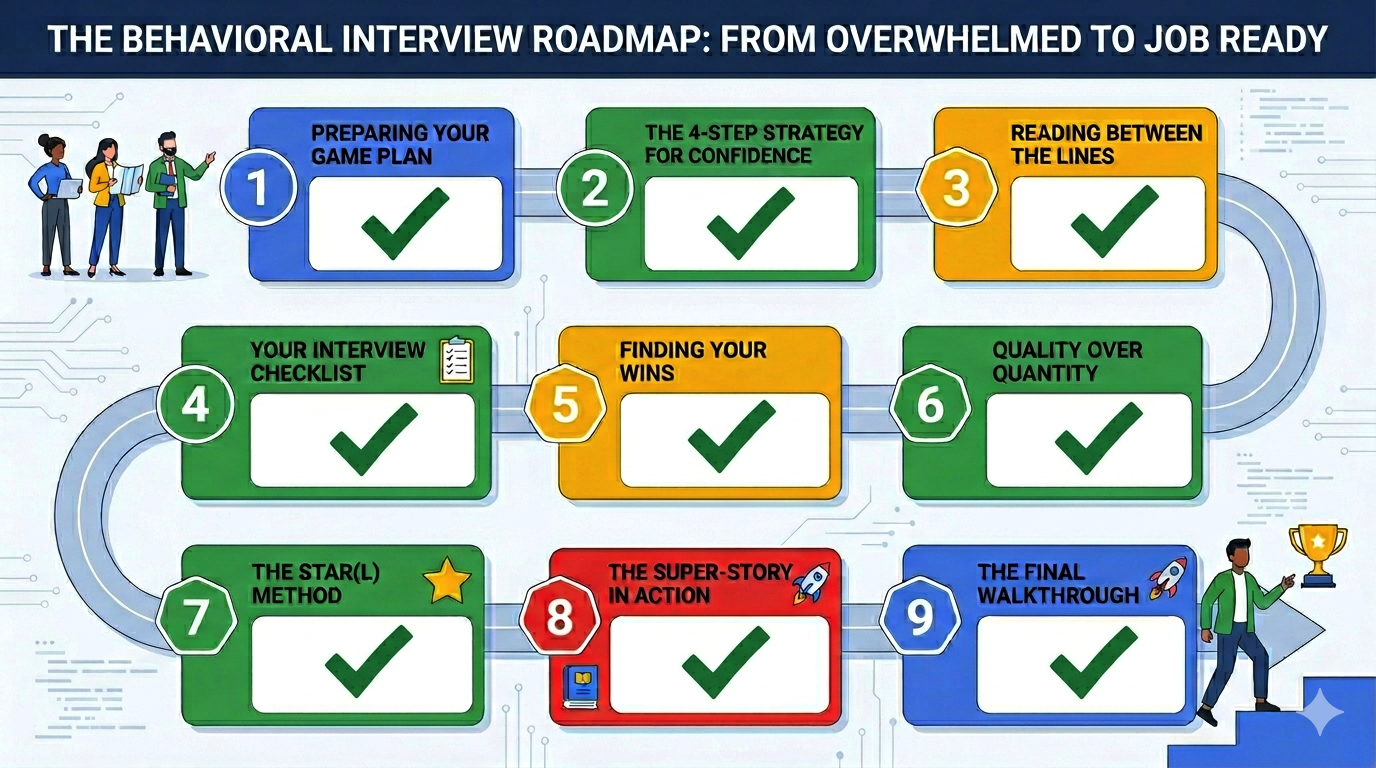
The Final Walkthrough: Finding Your Voice
This is Part 9 of my 9-part series: The Behavioral Interview Game Plan. [View the Full Series Roadmap] We’ve done the heavy lifting together. We’ve analyzed the job, mapped out your wins, and built your “Super-Stories” using the STAR(L) method. Now comes the part that truly brings it all together: Practice. It might feel a little silly at first, but practicing out loud is the best way to move from being “prepared” to being “fluent.” […]
Behavioral Interviews
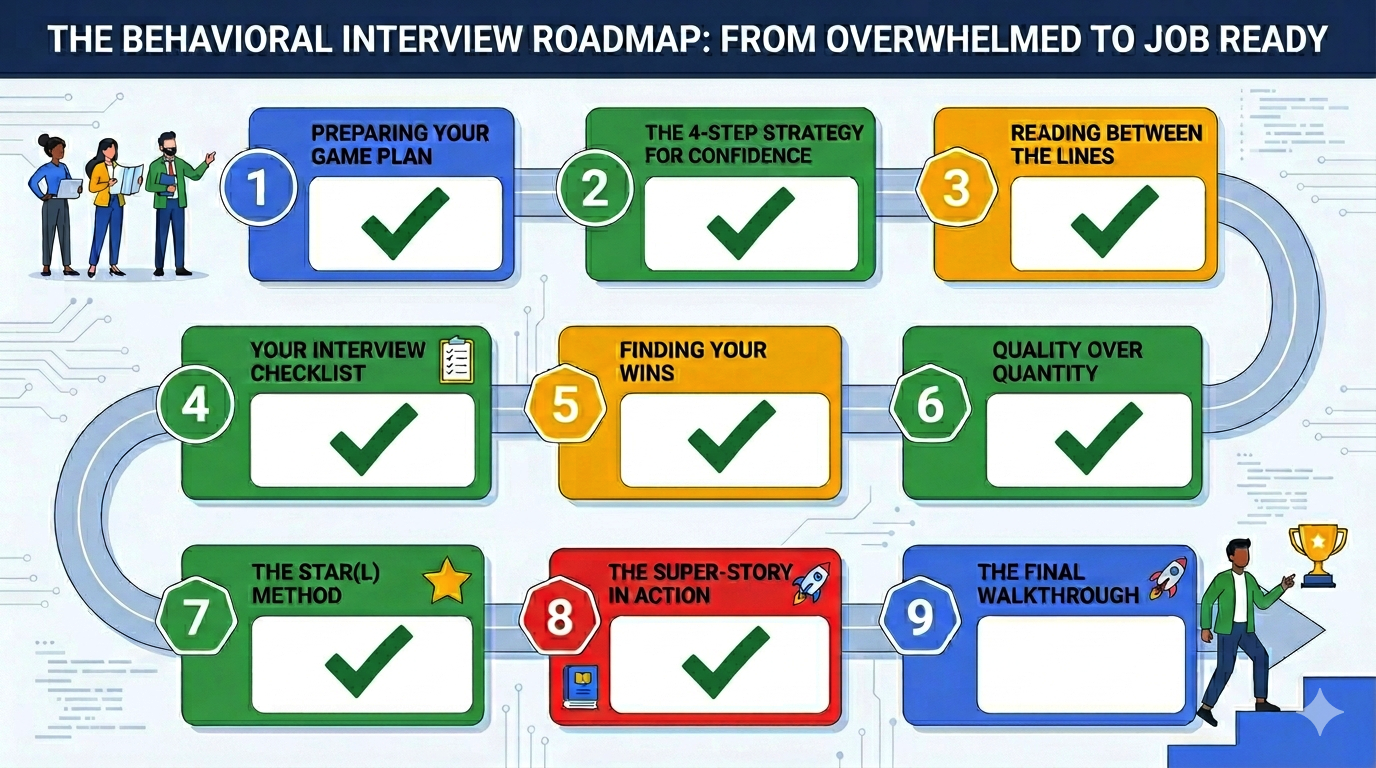
The “Super-Story”: Increasing Your Impact by Doing Less
This is Part 8 of my 9-part series: The Behavioral Interview Game Plan. [View the Full Series Roadmap] One of the most common mistakes I see in behavioral interview prep is trying to memorize too much. There is a lot of “mental overhead” that comes with keeping twenty different stories in your head. It’s stressful, and it often leads to shorter, less detailed answers. Instead, I want to show you how to build a “Super-Story.” […]
Behavioral Interviews
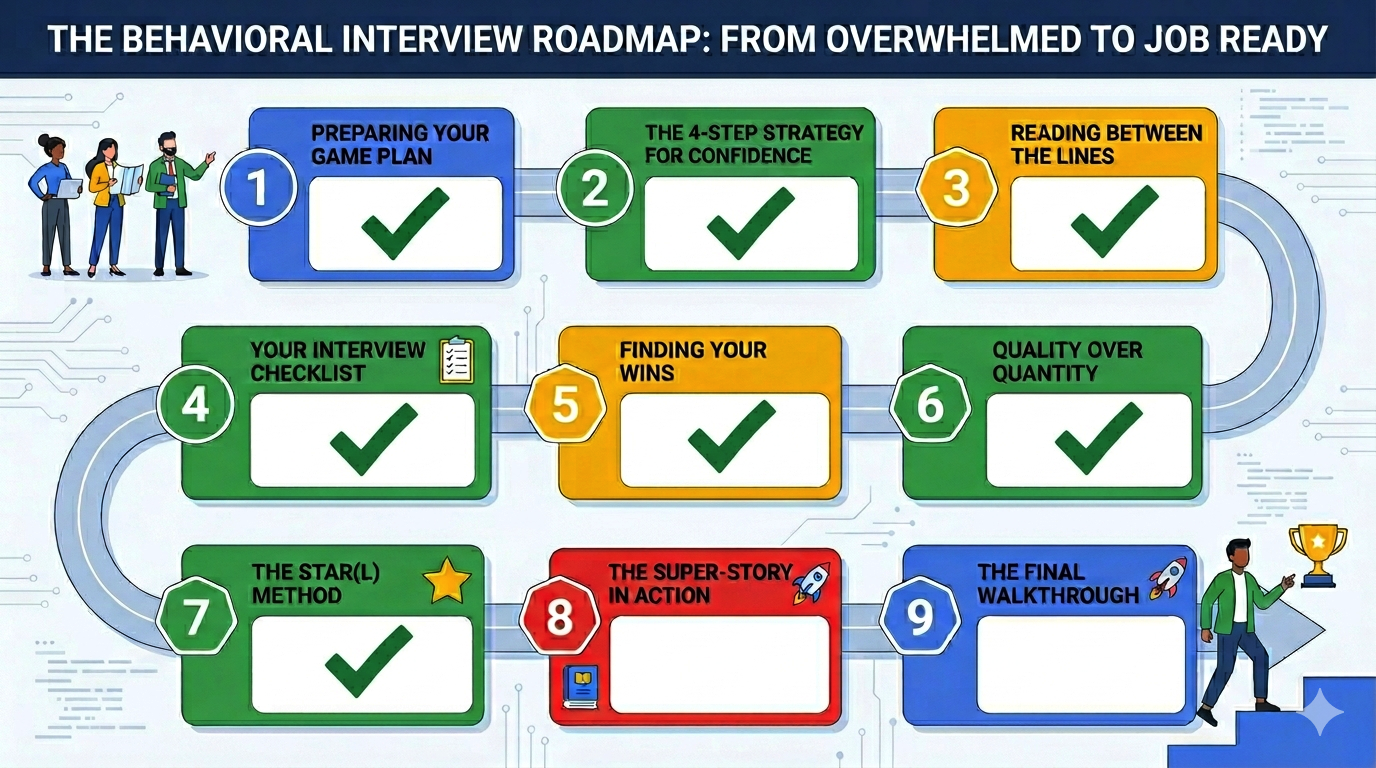
Telling Your Story with Impact: The STAR(L) Method
This is Part 7 of my 9-part series: The Behavioral Interview Game Plan. [View the Full Series Roadmap] When you’re in the middle of an interview, it’s easy for a story to wander. You might start with a great technical detail but forget to mention the outcome. To help you stay on track and feel confident, I recommend using the STAR(L) method. It’s a simple framework to ensure your stories are clear, concise, and impactful: […]
Behavioral Interviews
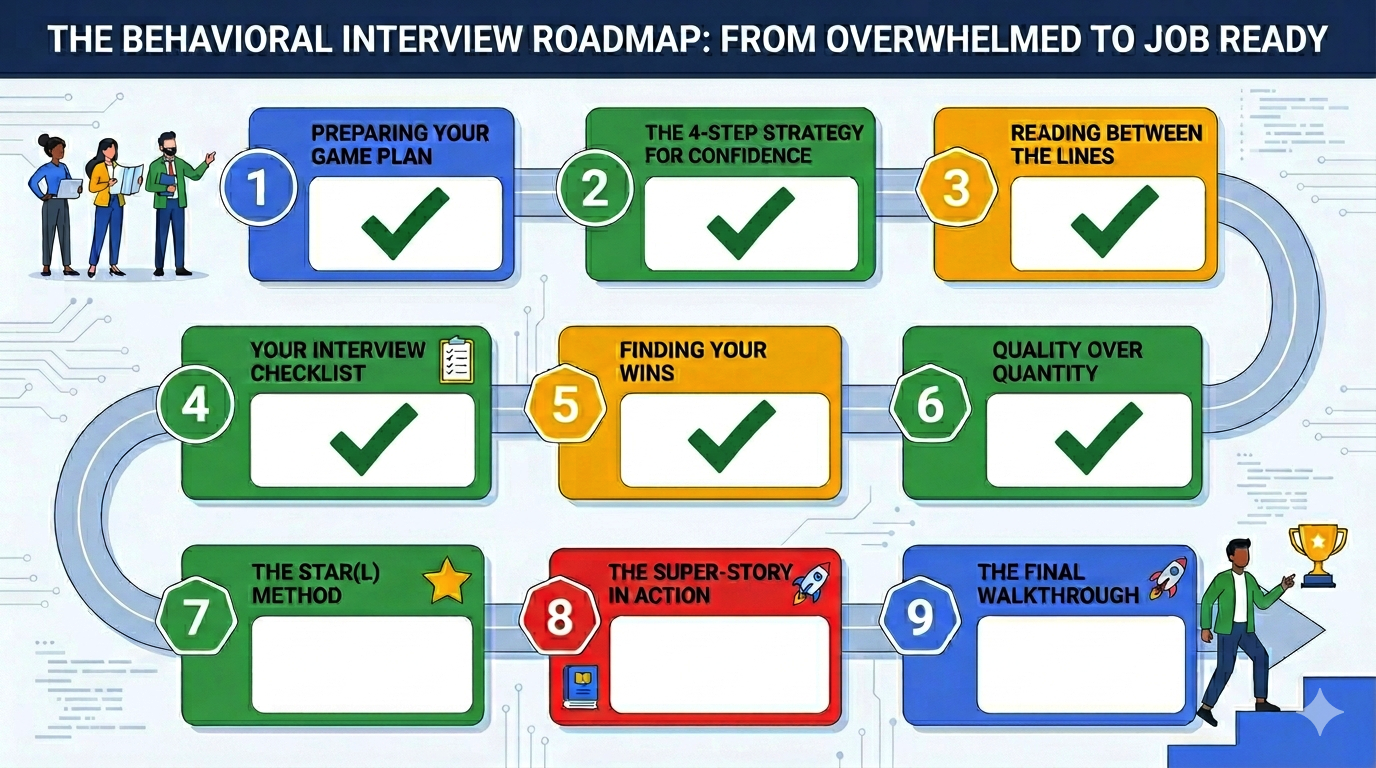
Quality Over Quantity: Simplifying Your Story Library
This is Part 6 of my 9-part series: The Behavioral Interview Game Plan. [View the Full Series Roadmap] One of the biggest hurdles in tech behavioral interviews is the feeling that you need a different story for every single question. But here’s something I always tell the people I coach: it’s much better to have a few “Super-Stories” that are rich in detail than a dozen short ones that are hard to remember. By combining […]
Behavioral Interviews
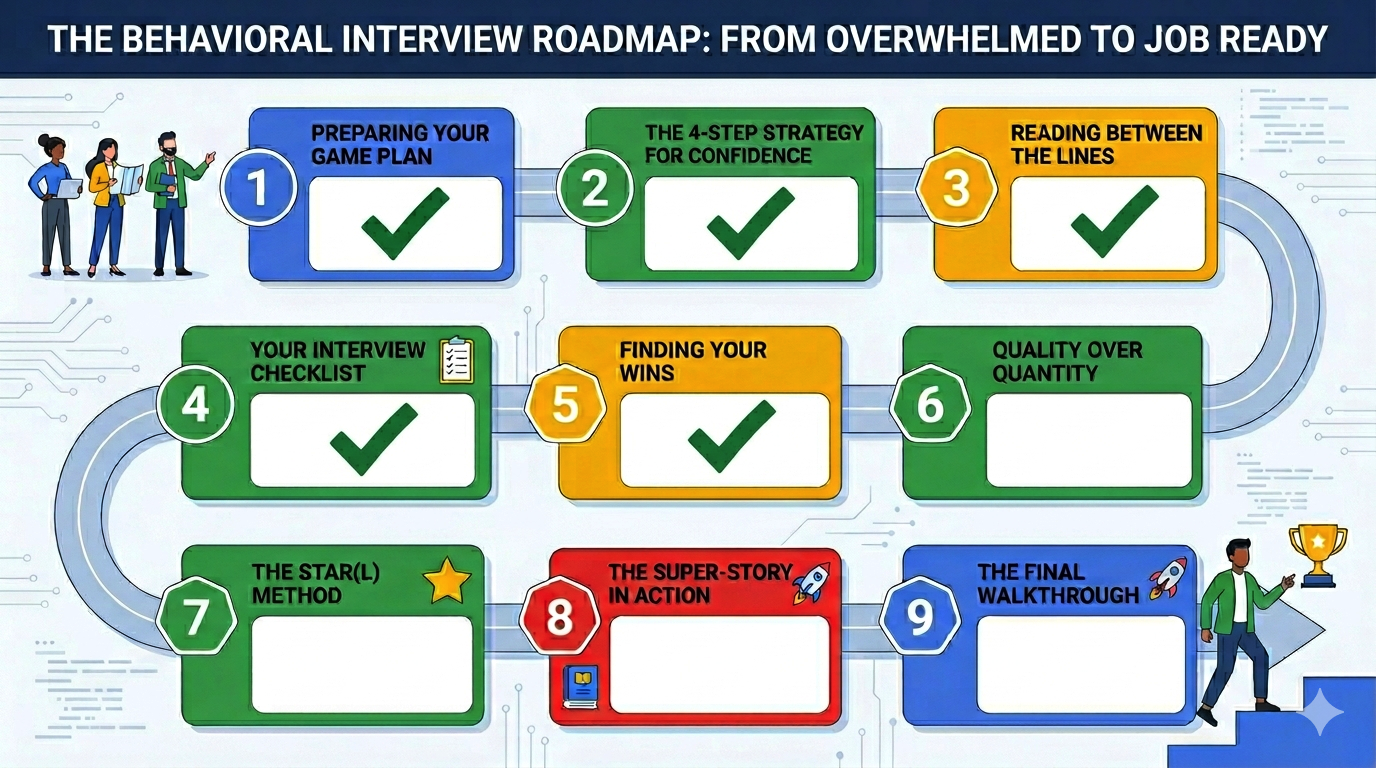
Finding Your Wins: Mapping Your Experiences to the Goal
This is Part 5 of my 9-part series: The Behavioral Interview Game Plan. [View the Full Series Roadmap] Now we get to the heart of our preparation: finding your stories. Sometimes, when we’re asked to talk about our past work, our minds go blank. We think, “I was just doing my job—was that really a ‘scenario’?” My advice? Yes, it was! Every bug you fixed and every collaboration with a designer is a “win” that demonstrates […]
Behavioral Interviews
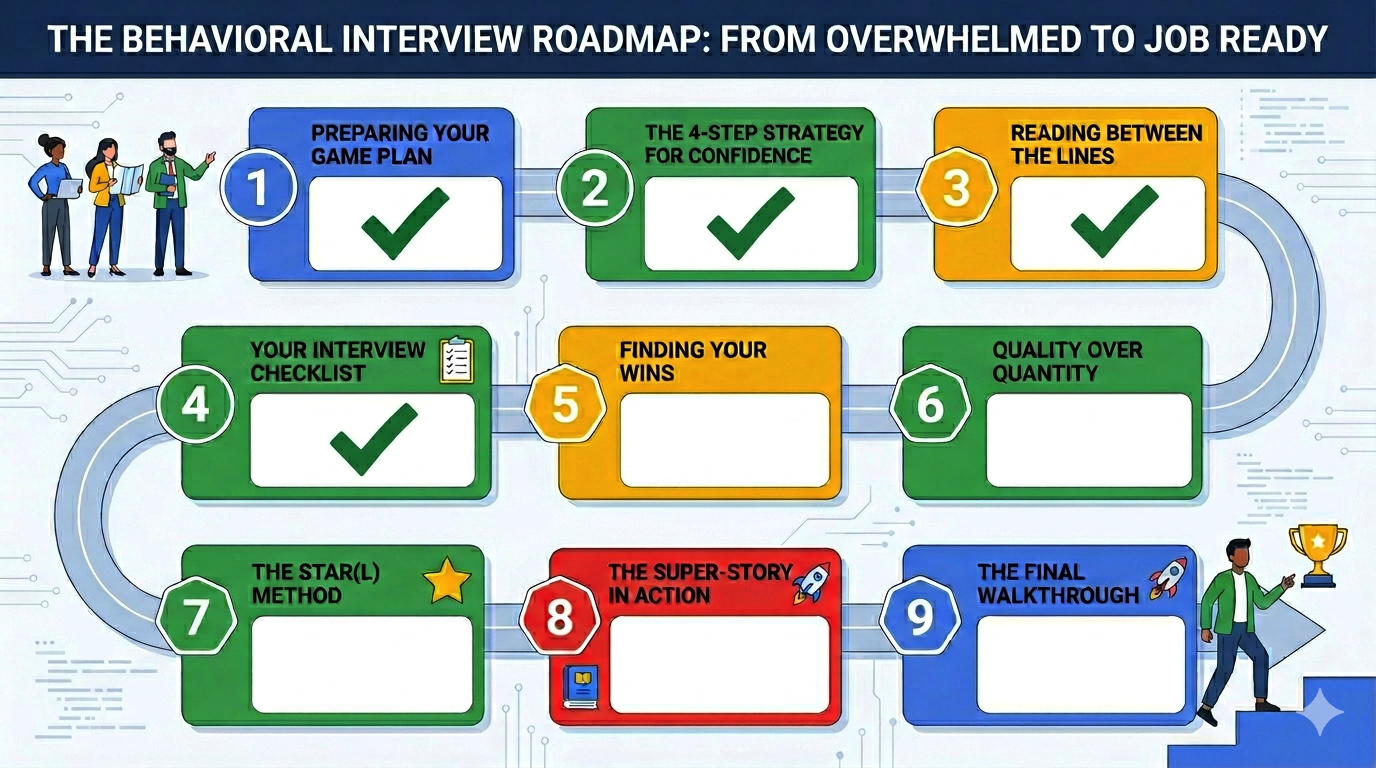
Simplifying the Goal: Your Attribute List
This is Part 4 of my 9-part series: The Behavioral Interview Game Plan. [View the Full Series Roadmap] In our previous step, we looked “under the hood” of the job description to identify the specific signals a company is looking for. It is common to feel a bit overwhelmed by the length of that list, but identifying these attributes early makes your preparation targeted and efficient. Rest assured that while this list looks long […]
Behavioral Interviews
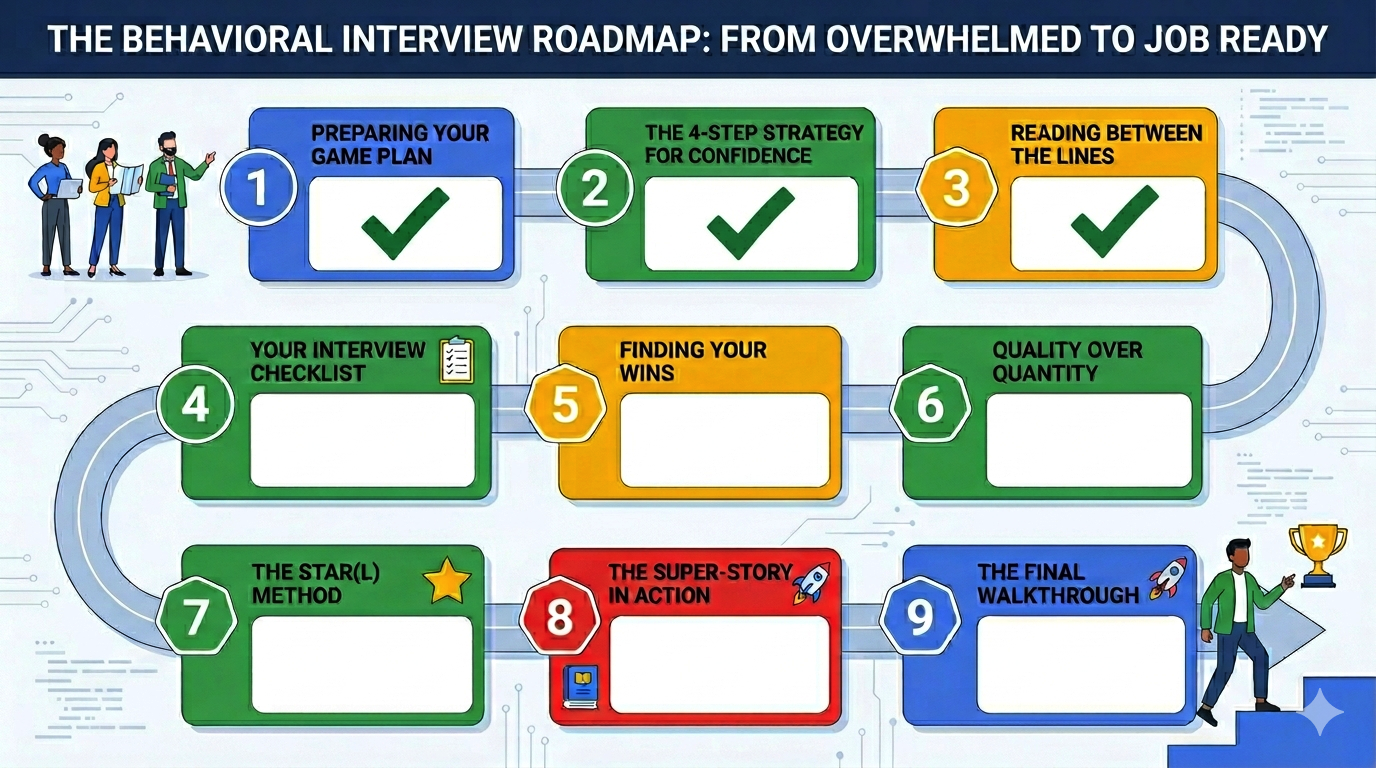
Reading Between the Lines: Identifying What Matters Most
This is Part 3 of my 9-part series: The Behavioral Interview Game Plan. [View the Full Series Roadmap] When you look at a job description, it can feel like a long list of demands. But I like to look at it differently: it’s actually a “cheat sheet” the company is giving you! It tells you exactly what they value and what they’ll likely ask you about during your behavioral interview. In this step of our […]